Kakteengewächse · Hylocereeae
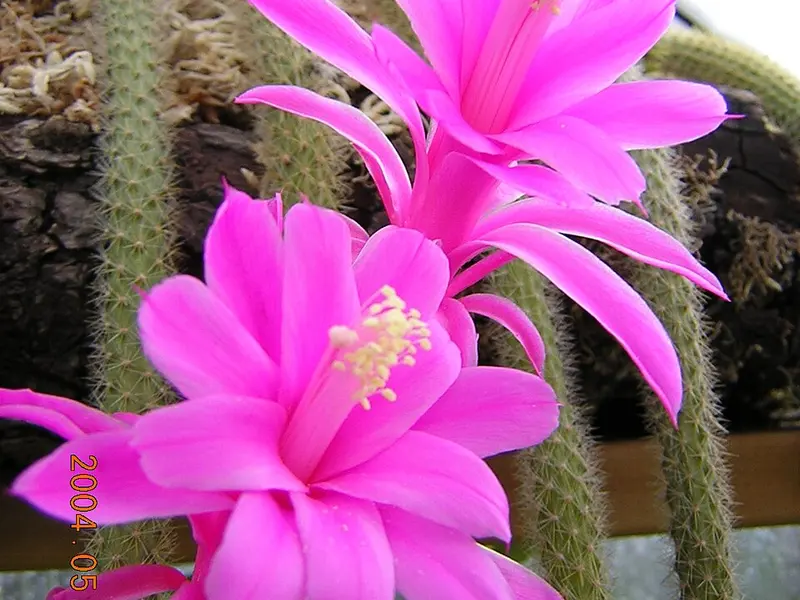
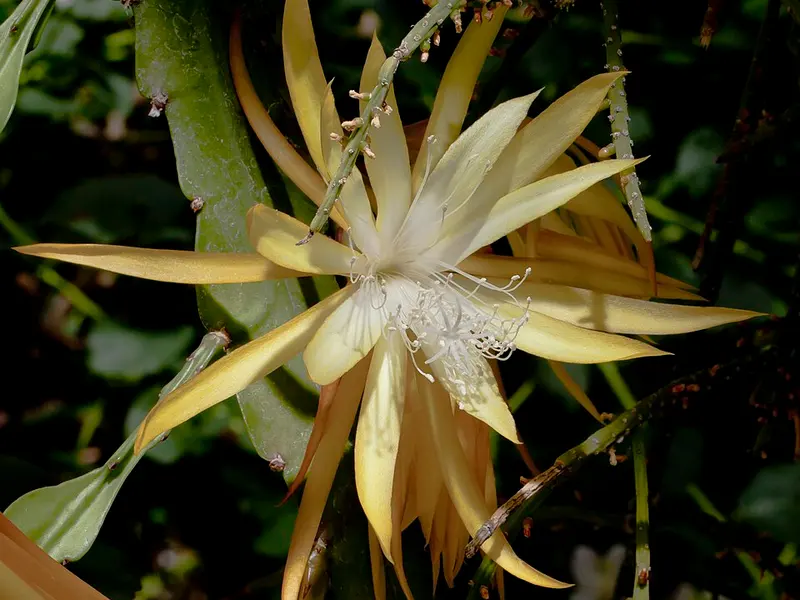
Disocactus
Hängende oder blattartige Triebe.
- Heimat
- Mexiko und Mittelamerika
- Familie
- Cactaceae (Kakteengewächse)
- Ordnung
- Caryophyllales
- Unterfamilie
- Cactoideae
- Tribus
- Hylocereeae
- Pflegegruppe
- Blatt- und Gliederkakteen (Epiphyten)
- Arten
- 27
Wo Disocactus im Pflanzenreich steht
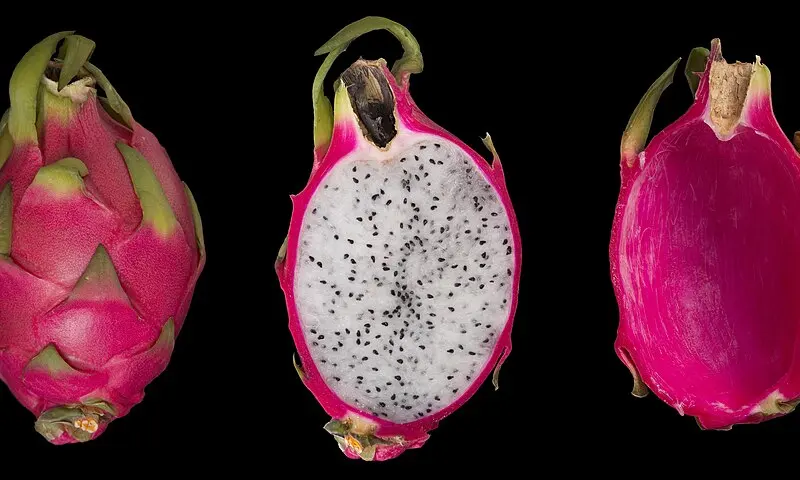
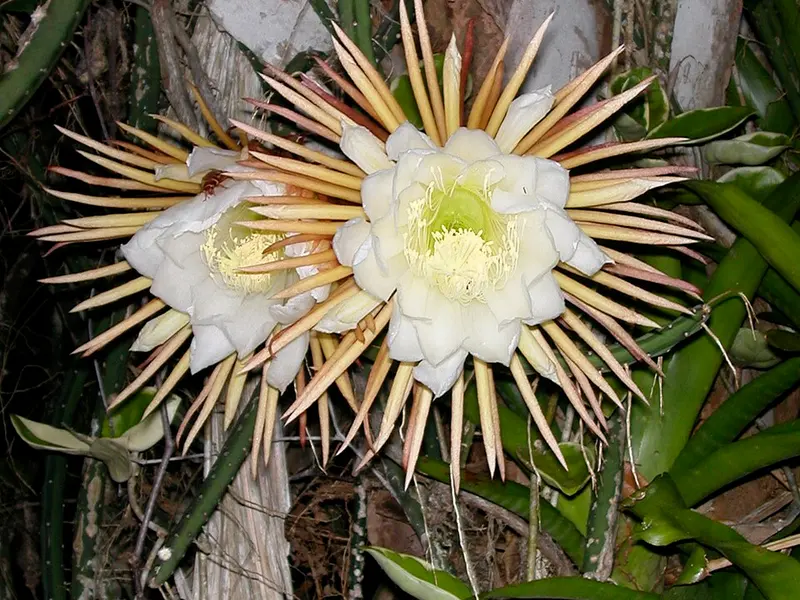
Kletternde und hängende Waldkakteen Mittelamerikas, darunter die Königin der Nacht und die Pitahaya.
Kurzprofil
Disocactus ist eine Kakteengattung. Heimat:Mexiko und Mittelamerika.
Pflege
Blatt- und Gliederkakteen (Epiphyten)
- Herkunft: Regenwald — sie wachsen auf Bäumen, nicht in der Wüste.
- Standort: hell, aber ohne pralle Mittagssonne.
- Substrat: locker und humos, etwa Rinde, Kokohum und Perlite.
- Keine trockene Winterruhe; eine kühlere Phase von einigen Wochen fördert die Blüte.
Nächste Verwandte · Hylocereeae
Im Stammbaum zeigen →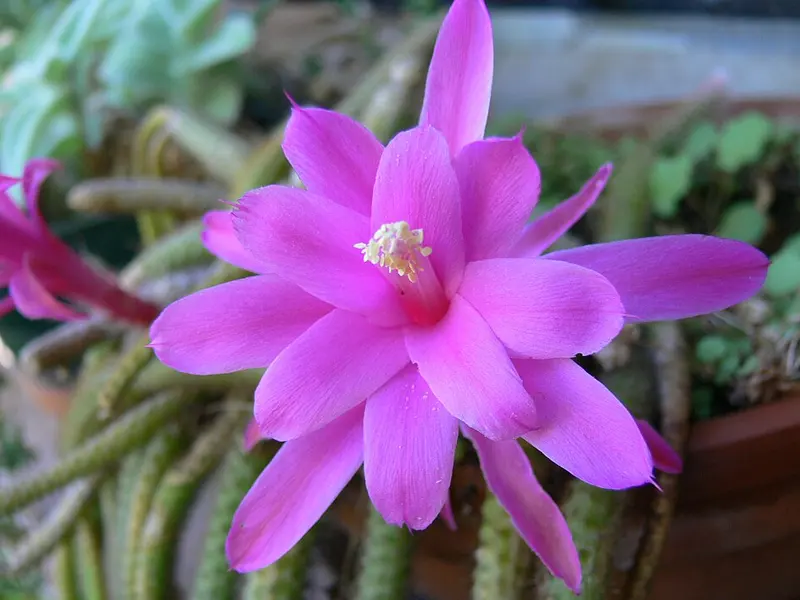
Arten · 36
Alle Kakteenarten →| Art | Beschrieben | Natürliche Verbreitung |
|---|---|---|
Disisocactus petersenii | Doweld, 2001 | – |
| (Haw.) Ralf Bauer, 2003 | Mexiko (Golfküste), Südostmexiko, Südwestmexiko | |
Disocactus amaranthinus | (Regel) M.H.J.van der Meer, 2018 | – |
 Disocactus anguliger | (Lem.) M.Á.Cruz & S.Arias, 2016 | Zentralmexiko, Nordostmexiko, Südwestmexiko |
 Disocactus aurantiacus | (Kimnach) Barthlott, 1991 | Honduras, Nicaragua |
 Disocactus biformis | (Lindl.) Lindl., 1845 | Guatemala, Honduras |
 Disocactus blomianus | (Kimnach) Lodé, 2020 | Südostmexiko |
Disocactus capelleanus | (Rother) E.Meier, 2006 | Südostmexiko |
Disocactus charltonii | (Mast.) M.H.J.van der Meer, 2018 | – |
Disocactus coopermannii | (Worsley) M.H.J.van der Meer, 2018 | – |
 Disocactus crenatus | (Lindl.) M.Á.Cruz & S.Arias, 2016 | Belize, El Salvador, Guatemala, Honduras, Zentralmexiko, Mexiko (Golfküste), Nordostmexiko, Südostmexiko, Südwestmexiko, Panama |
 Disocactus eichlamii | (Weing.) Britton & Rose, 1913 | Guatemala |
Disocactus hansii | (Baumann ex Lem.) M.H.J.van der Meer, 2018 | – |
Disocactus heterodoxus | (Standl. & Steyerm.) Lodé, 2020 | Guatemala, Südostmexiko |
 Disocactus hondurensis | (Kimnach) Lodé, 2020 | Honduras |
Disocactus jenkinsonii | (McIntosh) M.H.J.van der Meer, 2018 | – |
Disocactus lepidocarpus | (F.A.C.Weber) M.Á.Cruz & S.Arias, 2016 | Costa Rica, Panama |
Disocactus lodei | Véliz, L.Velásquez & R.Puente, 2014 | Guatemala |
 Disocactus macdougallii | (Alexander) Barthlott, 1991 | Südostmexiko |
 Disocactus macranthus | (Alexander) Kimnach & Hutchison, 1957 | Guatemala, Mexiko (Golfküste), Südostmexiko, Südwestmexiko |
Disocactus moennighoffii | (D.F.Fisch.) E.Meier, 2006 | – |
 Disocactus nelsonii | (Britton & Rose) Linding., 1942 | Guatemala, Südostmexiko, Südwestmexiko |
 Disocactus phyllanthoides | (DC.) Barthlott, 1991 | Zentralmexiko, Mexiko (Golfküste), Nordostmexiko, Südwestmexiko |
 Disocactus quezaltecus | (Standl. & Steyerm.) Kimnach, 1959 | Guatemala |
 Disocactus salvadorensis | Cerén, J.Menjívar & S.Arias, 2017 | El Salvador |
 Disocactus speciosus | (Cav.) Barthlott, 1991 | El Salvador, Guatemala, Honduras, Zentralmexiko, Nordostmexiko, Nordwestmexiko, Südostmexiko, Südwestmexiko |
Disocactus splendens | (Regel) M.H.J.van der Meer, 2018 | – |

Früher zu Disocactus gestellt — heute unter anderem Namen
| Bekannt als | Heute anerkannt als | Natürliche Verbreitung |
|---|---|---|
| Disocactus flagelliformis | Aporocactus flagelliformis | Zentralmexiko, Mexiko (Golfküste), Nordostmexiko |
| Disocactus martianus | Aporocactus martianus | Zentralmexiko, Mexiko (Golfküste), Nordostmexiko, Südwestmexiko |
| Disocactus mallisonii | Aporodisocactus mallisonii | – |
| Disocactus ramulosus | Kimnachia ramulosa | Belize, Bolivien, Nordbrasilien, Kolumbien, Costa Rica, Ecuador, Guatemala, Honduras, Jamaika, Zentralmexiko, Mexiko (Golfküste), Südostmexiko, Südwestmexiko, Nicaragua, Peru, Venezuela |
| Disocactus acuminatus | Pseudorhipsalis acuminata | Costa Rica, Panama |
| Disocactus alatus | Pseudorhipsalis alata | Jamaika |
| Disocactus amazonicus | Pseudorhipsalis amazonica | Nordbrasilien, Kolumbien, Costa Rica, Ecuador, Panama, Peru, Venezuela |
| Disocactus himantocladus | Pseudorhipsalis himantoclada | Kolumbien, Costa Rica, Panama |
| Disocactus lankesteri | Pseudorhipsalis lankesteri | Costa Rica |
Quelle: World Checklist of Vascular Plants (WCVP), Royal Botanic Gardens, Kew — über GBIF,CC BY 4.0, abgerufen am 2026-11-09. Regionen nach dem TDWG-Standard, auf Deutsch übertragen. Fotos: Wikimedia Commons, Urheber und Lizenz je Bild in den Bildnachweisen.